 Catalina Island Snorkeling
Best Time to Visit Catalina Island, Dominican Republic
Last reviewed September 2026
The best time to visit Catalina Island, Dominican Republic is December through March, when rainfall drops to 19–37 mm across only 7–10 rainy days a month and the crossing is calmest outside of February's wind. The runner-up window is April through June, still dry but warming; the window to actively avoid is September and October, the Atlantic hurricane-season peak, when 128–137 mm of rain falls across 19 rainy days. Sea temperature barely moves all year, so timing this trip is really about rain and wind, not water. Below is the month-by-month data behind that verdict, plus the Catalina Island snorkeling trips on sale now for whichever window you pick.
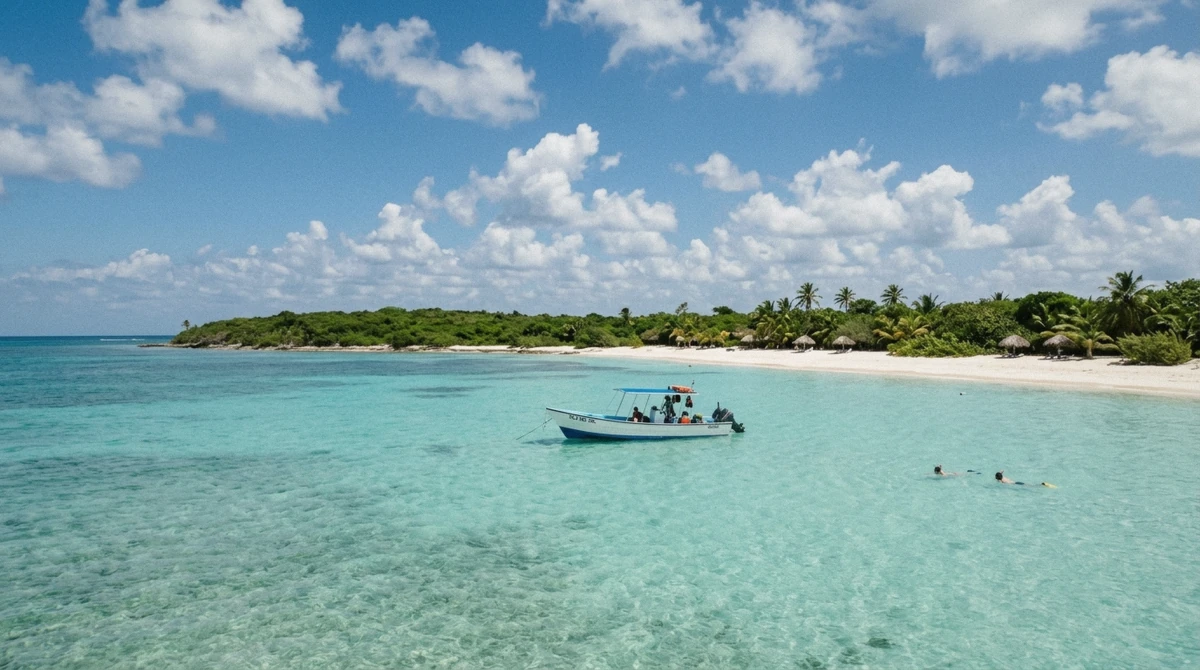
Quick answer December to March is driest; September and October are the months to actually avoid
The best window is December through March, when monthly rainfall runs just 19 to 37 mm across 7 to 10 rainy days: the clearest, calmest stretch of the year. The runner-up is April through June, still dry but noticeably warmer. September and October are the months to avoid: 128 to 137 mm of rain across 19 rainy days each, at the peak of the Atlantic hurricane season.
Key takeaways
- Best window: December to March, 19–37 mm of rain a month: the driest, clearest stretch
- Runner-up: April to June, still dry, air temperatures climbing toward 30–31°C
- Avoid: September and October, 128–137 mm of rain and the hurricane-season peak
- Counterintuitive fact: sea temperature never drops below 27°C in any month, so no wetsuit is ever needed
- February is the windiest month at 21.3 km/h, and the crossing suffers rather than the snorkeling
- Check the current listings against a specific date before booking
The Short Answer, by Month
One calendar, two seasons
Catalina Island's calendar splits cleanly into a dry season and a wet season, and almost every planning question below traces back to that split. December through March is the driest and clearest stretch, April through June is a warm, still-dry shoulder, and July through November carries increasing rain, culminating in the September–October hurricane-season peak. Sea temperature is the one variable that does not move enough to matter. The coldest month is still 27.1°C and the warmest is 30.3°C, so no wetsuit is needed in any month of the year.
That split matters more for planning a Catalina Island trip than it does for most Caribbean destinations, because the reward for picking the right window is unusually large: the same reef that photographs as a postcard in February can run cloudier and choppier in October, without the operator, the boat or the fare changing at all. A traveler locked into a single week of vacation gains far more from checking this calendar than from comparing another dollar or two between listings.
Month by Month: Water, Rain and Wind
The table below combines sea-surface temperature (Open-Meteo Marine, ERA5, monthly mean of daily maxima, September 2025 – August 2026) with land rainfall for the Bayahibe area (Open-Meteo ERA5 archive, 2021–2025 means), Celsius first with the Fahrenheit reading alongside.
The full year
Rain and rainy-day counts move far more than sea temperature does across the year, which is the whole reason to plan around the calendar rather than the water.
| Month | Sea temp | Rain | Verdict |
|---|---|---|---|
| January | 27.5°C / 82°F | 19 mm, 7 days | Dry, calm |
| February | 27.2°C / 81°F | 22 mm, 8 days | Dry, windiest month |
| March | 27.1°C / 81°F | 37 mm, 10 days | Dry, clear |
| April | 27.9°C / 82°F | 90 mm, 16 days | Rain rising |
| May | 28.8°C / 84°F | 103 mm, 14 days | Warm, wetter |
| June | 29.2°C / 85°F | 87 mm, 14 days | Warm, mixed |
| July | 29.6°C / 85°F | 68 mm, 15 days | Warm, drier spell |
| August | 29.6°C / 85°F | 118 mm, 17 days | Hot, wet |
| September | 30.3°C / 87°F | 128 mm, 19 days | Hurricane peak |
| October | 30.1°C / 86°F | 137 mm, 19 days | Hurricane peak |
| November | 29.2°C / 84°F | 104 mm, 12 days | Rain easing |
| December | 28.2°C / 83°F | 49 mm, 9 days | Dry returning |
Reading the table
The hottest sea month is September at 30.3°C, the coolest is March at 27.1°C, and the wettest land month is October at 137 mm across 19 rainy days: a three-degree swing in water temperature against a seven-fold swing in rainfall is exactly why this guide's verdicts are built around rain and wind rather than water.
Why the Water Temperature Is Not a Factor
27°C is the floor, not the exception
The counterintuitive fact worth stating plainly: most travelers assume a Caribbean island has a cold season for swimming, and Catalina Island simply does not. The coldest monthly mean on the year-long Open-Meteo Marine record is 27.1°C in March; the warmest is 30.3°C in September. The water never drops below 27°C in any month, so no wetsuit is needed whichever month you book.
That single fact removes an entire category of packing decisions that matter on most other snorkeling trips.
The Windy Months, and What Wind Actually Spoils
The crossing, not the reef
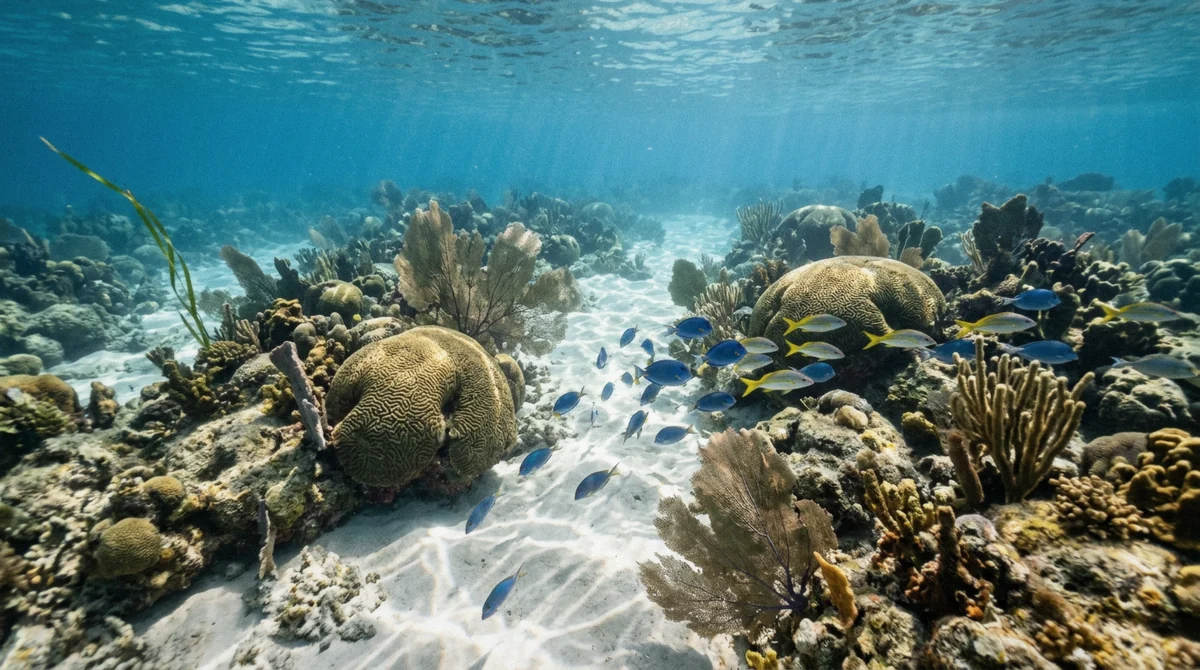
February carries the windiest daily maxima on the 2021–2025 record at 21.3 km/h, and several reviewers of the day trips compared on this site mention a rough crossing rather than rough snorkeling. That distinction matters: the boats moor in sheltered water at both named sites, so the reef itself stays calm even on a breezy day. What wind actually spoils is the open-water run out and back, which is a comfort issue rather than a reason to cancel the trip outright. Visibility around Bayahibe can still exceed 20 to 30 m on a windy dry-season day, since wind and underwater clarity do not move together the way many travelers expect.
A sailing catamaran feels a windy crossing more than a motorized engine boat does, simply because it is under sail rather than power for part of the run. Travelers prone to seasickness who are choosing between the listings compared on this site should weigh that difference alongside price: a smoother February crossing on an engine boat can matter more to the day than an extra named snorkel stop on a catamaran that pitches with the swell.
Hurricane Season, Honestly
September and October are the real risk window
September and October sit at the peak of the Atlantic hurricane season and carry the two highest rainfall totals on the record, 128 mm across 19 rainy days and 137 mm across 19 rainy days respectively. That does not mean every day in either month is lost. Most of that rain falls in short, heavy bursts rather than as continuous washouts, but it does mean the odds of a cancelled or rescheduled day are highest in this window.
The full-day trip from Punta Cana states plainly that it runs rain or shine, which is worth knowing if a fixed date is unavoidable; every listing here, including the small-group trip and the Quetzal catamaran, allows free cancellation up to 24 hours before pickup regardless of the forecast.

The Second Calendar: Cruise-Ship Days
A calendar the weather forecast will not show you
Weather is not the only schedule that matters here. Isla Catalina and Isla Saona together took more than one million visitors in 2025, and a share of that traffic arrives by cruise ship, which anchors offshore and tenders passengers ashore rather than docking. A new private-beach development, Catalina Sugar Beach, opens in November 2026, with MSC Opera's first listed call on 17 November 2026 from 07:00 to 17:00 and four further calls that month, listed below exactly as cruisemapper records them.
None of this changes the water or the weather, but it does mean the beach can be shared with several thousand extra people on a call day even in the middle of the driest, calmest month on the climate table above. This calendar and its practical effect on the beach are covered in full on the homepage; check the specific date there before booking, whichever month you pick.
| Date | Ship | Hours ashore |
|---|---|---|
| 17 November 2026 | MSC Opera (Catalina Sugar Beach opening call) | 07:00 – 17:00 |
| 19 November 2026 | MSC Explora 3 | 08:00 – 17:00 |
| 24 November 2026 | Mein Schiff 5 | 07:00 – 18:00 |
| 29 November 2026 | MSC Opera | 08:00 – 18:00 |
| 30 November 2026 | Marella Discovery | 08:00 – 18:00 |
What a call day actually changes
None of the five snorkeling day trips compared on this site is cancelled or rerouted by a cruise call, because the snorkel moorings at The Wall and The Aquarium sit offshore, away from wherever a ship has anchored. What changes is beach space: on a call day, the sand carries the tendered cruise passengers in addition to the day-trip groups, roughly between the hours listed in the table above. A traveler who cares more about a quiet beach than about avoiding a specific month should cross-check the date against this calendar rather than against the rain and wind data alone.
The two calendars run independently of each other, and a perfect-weather day can still be a crowded one.
Best Month by Traveller Type
If You want the calmest, clearest conditions and can travel any month
Book December through March: driest window, only 19 to 37 mm of rain a month
If You get seasick easily
Avoid February specifically; it is the windiest month on the record even though it sits inside the dry season
If You want to avoid crowds more than you want perfect weather
Consider April through June: still dry, air temperatures climbing, and school-holiday crowds from the northern winter have thinned
If Your travel dates are fixed to September or October
Go, but pick a listing that states it runs rain or shine, and expect a real chance of a rescheduled day
If You are booking a specific date regardless of season
Check that date against the cruise-ship calendar first, because the water and weather can be perfect and the beach still crowded
Questions About the Best Time to Visit Catalina Island
What is the best month to visit Catalina Island?
December through March, when rainfall drops to 19–37 mm a month across just 7 to 10 rainy days, the driest and clearest window on the record.
Do you need a wetsuit at Catalina Island?
No. Sea temperature never drops below 27.1°C even in the coolest month, March, and reaches 30.3°C in September, so no wetsuit is needed in any month.
Is Catalina Island good in hurricane season?
It can still be visited, but September and October carry the highest rainfall on the record, 128 and 137 mm across 19 rainy days each, and the highest odds of a cancelled or rescheduled day. Pick a listing that states it runs rain or shine if the date is fixed.
When is the water clearest at Catalina Island?
Visibility around Bayahibe can exceed 20 to 30 m and tends to hold up best during the dry season, December through March, when less rainfall runs sediment into the coastal water.
What happens if it rains on the day of a Catalina Island trip?
One of the five listings compared on this site explicitly runs rain or shine; every listing allows free cancellation up to 24 hours before pickup, so a forecast that turns bad ahead of time is not a lost booking.
Why is February windy if it is inside the dry season?
The dry season and the windy season are not the same calendar. February carries the windiest daily maxima on the 2021–2025 record at 21.3 km/h despite low rainfall, and that wind affects the crossing rather than the water clarity or the snorkeling itself.
None of this calendar changes what the island itself is. The reef, the wreck and the water stay essentially the same in every month. What changes is how comfortable the crossing feels, how much rain interrupts the day, and how many other people are standing on the same beach.
Match the month to what matters most to you, check the specific date against the cruise-ship calendar, weigh it against what each day trip actually costs, and start from this Catalina Island snorkeling season guide for whichever window you land on.